Seagan: Can Vegan and Seafood Share One Menu?
We serve plants and wild-caught fish and no land meat at all. People ask us about that choice more than anything else on the menu, so here is the whole answer.
Seagan is a plant-based diet that also includes sustainably caught seafood. Sea, plus vegan. It is not a clever label we invented for a menu — it describes how a lot of people on this island already eat, and it is close enough to what we cook that we may as well use the word.
It is also not vegan, and we will not pretend otherwise. Fish are animals. A vegan does not eat them. If you came here looking for a fully vegan restaurant, the honest answer is that we are not one, and the vegan restaurant guide names the places that are.
Why one menu instead of two
Most restaurants that cater to both build a main menu and then a vegan annexe — a short list at the back, usually three dishes, usually the ones the kitchen finds easiest. Everyone involved can tell which list came first.
We went the other way. Of 26 dishes, 17 are entirely plant-based and 9 are wild-caught seafood. Plant-based is the majority of the menu, not the accommodation on it. Starters and mains are laid out together rather than segregated, so a table orders across both and shares.
Every dessert is plant-based. Not as a statement — it is simply that once you stop reaching for dairy and eggs, coconut and cashew turn out to do the job, and nobody at the table can tell which category they are eating from.
The question a mixed table actually asks
Two people arrive. One is vegan, the other wants the fish. The real worry is not philosophy, it is whether one of them is about to have a worse evening than the other.
"Will I be eating a side dish?"
No. The charred cauliflower risotto, the smoked eggplant with tempeh and coconut curry and the butternut squash fritters are main courses that took as long to develop as anything with fish in it. The plant-based side of this menu is where most of the kitchen's attention went, because it is most of the menu.
"Is it cooked in the same pan as the fish?"
Plant-based dishes have their own pans and the fryer is not shared with seafood. But we are one kitchen, not two, and we would rather tell you that than promise a sterile boundary we cannot prove. If you avoid all cross-contact for medical or religious reasons, say so when you book and we will tell you exactly what we can guarantee that night.
"Does the fish eater get the short straw?"
Also no, and this is the failure mode nobody warns you about. Plant-forward kitchens often treat the fish as a concession and cook it carelessly. Ours is landed by local boats and is the reason several people come back — see where to eat seafood on the island for how it compares.
Why no land meat
The decision was practical before it was ethical, and we would rather say that than dress it up. We could not source land meat on this island to a standard we were prepared to serve. Everything would have arrived frozen, from somewhere we could not verify, and we would have spent the whole time apologising for it.
Leaving it off meant one kitchen doing two things properly rather than three things adequately. That is the entire reasoning. The environmental argument is real and we agree with it, but it followed the decision rather than driving it.
Where the seafood comes from, why wild-caught is not automatically the better answer and which fish are worth ordering here is a longer subject, and it has its own guide.
The ethical standpoint behind it
Three reasons, and we would rather set them out than gesture at them.
Nothing here comes from a farm or a factory
Industrial animal agriculture is where the overwhelming weight of animal suffering actually sits — confinement, breeding for yield, slaughter at scale. We are outside that system completely. No land meat at all, and no farmed fish either: everything is wild-caught. That is the single largest thing a kitchen can do to reduce its part in it, and it is a bigger reduction than most menus that describe themselves as conscious.
It supports the fishermen who live here
The fish is landed by boats working off this island and bought through local markets. That money stays with families on Koh Phangan instead of an industrial supply chain, and it keeps a small-boat fishery viable — which is the fishery you want surviving, because it is the one that takes least.
Some people genuinely need the fatty acids
The long-chain omega-3s, EPA and DHA, matter for heart and brain function, and some people need them from their diet for medical reasons or in pregnancy. No whole plant food supplies them. Flax, chia and walnuts give you ALA, which the body converts to EPA only in single-digit percentages and to DHA barely at all. There is one plant route — algae-derived oil, which is where the fish get theirs — but it is a supplement in a capsule, not something you can put on a plate. Oily fish remains the way to eat them rather than swallow them.
None of which makes wild capture costless. There is bycatch, and a fish caught on a line is still a fish. We would rather say that here than have you find the caveat somewhere else — the sourcing guide is where we go into what wild-caught does and does not buy you.
Frequently asked questions
What does seagan mean?
Plant-based eating that also includes sustainably caught seafood — a portmanteau of "sea" and "vegan". It differs from standard pescatarian eating in emphasis: the plants are the point, and the fish is the small part.
Can vegans eat seafood?
No. Veganism excludes all animal products and fish are animals. Someone eating seafood alongside an otherwise plant-based diet is seagan or pescatarian, not vegan. The distinction matters to the people it matters to, so we keep it straight.
Is the whole menu vegan?
No. 17 of 26 dishes are entirely plant-based, 9 are wild-caught seafood, every dessert is plant-based, and there is no land meat anywhere. The full menu marks which is which.
Is plant-based food cooked separately?
Separate pans, and the fryer is not shared with seafood. We are one kitchen rather than two, so for strict cross-contact needs, tell us when you book.
Do I need to book?
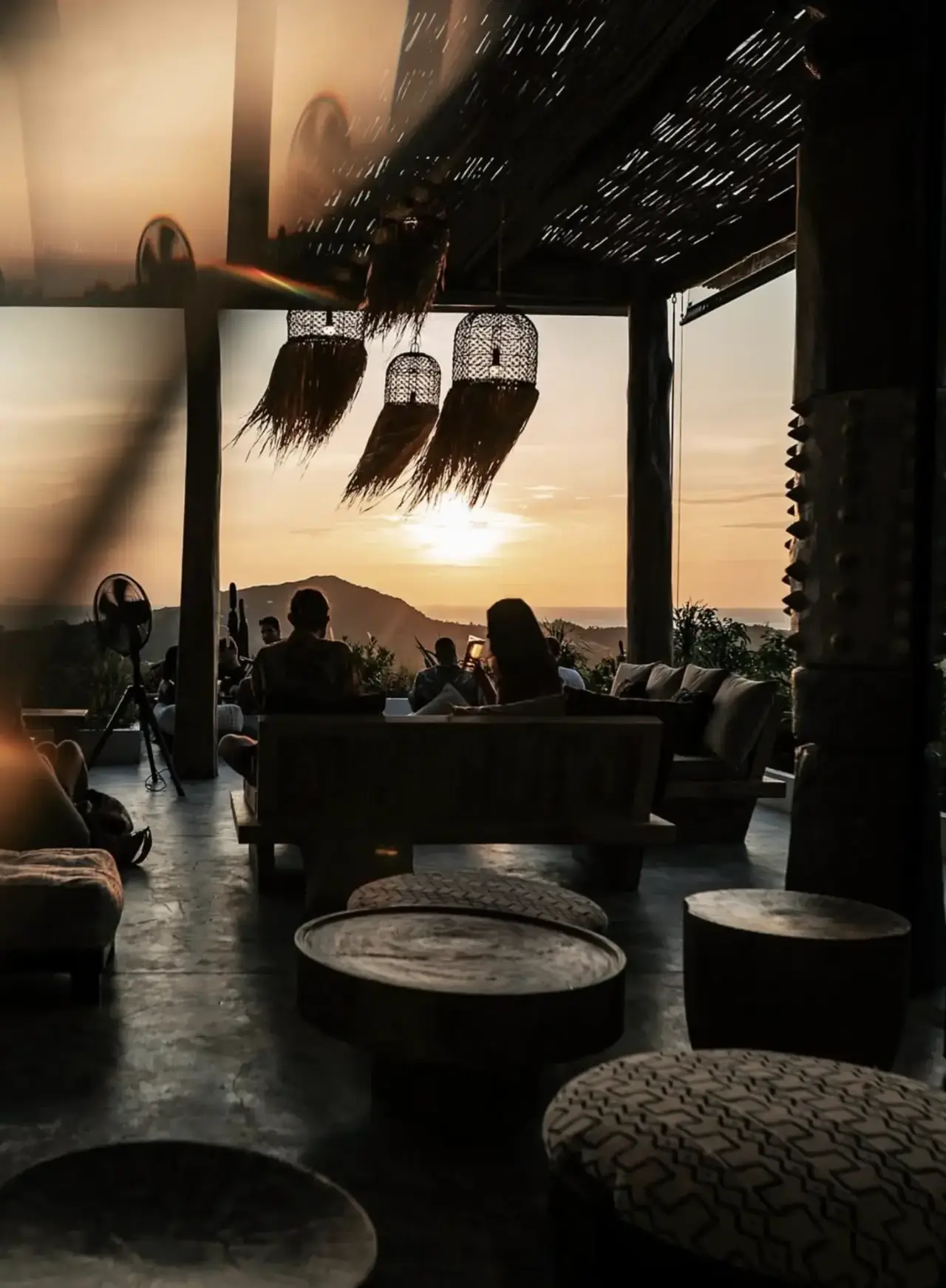
For the sunset window between 17:00 and 18:30, yes. Earlier in the afternoon there is usually space. Reserve a table, or read the plant-based kitchen page first.
More guides
The Best Seaview Restaurants in Koh Phangan
Ten places to eat with the water in front of you — hilltop panoramas against beachfront tables, what each costs, and which suits the evening you have in mind.
Hidden Gems on Koh Phangan
The places that stay off the itinerary — unmarked bays, a jungle reservoir, a Chinese temple almost nobody visits, and the sandbar that only exists at low tide.
Must-See Jungle & Mountain Viewpoints on Koh Phangan
Seventy per cent of this island is jungle, and the best views are inland. Seven high points you climb to through forest, and what each one actually gives you at the top.